Home / Products / Wire Mesh Filters / Spot Welded Mesh Sheets / Multi-Layer Spot Welded Wire Mesh Panel

Multi-Layer Spot Welded Wire Mesh Panel

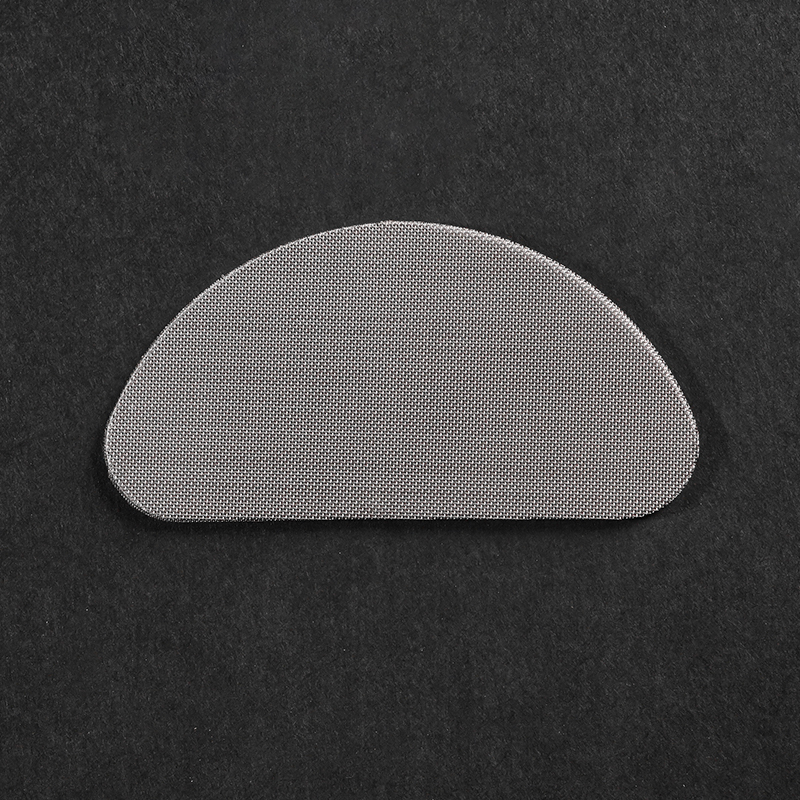
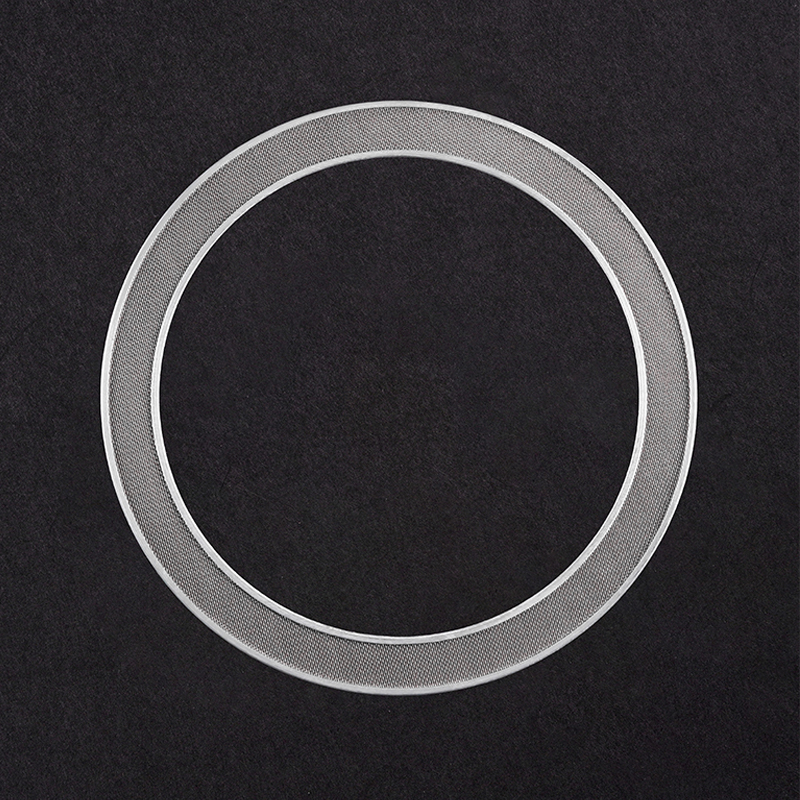
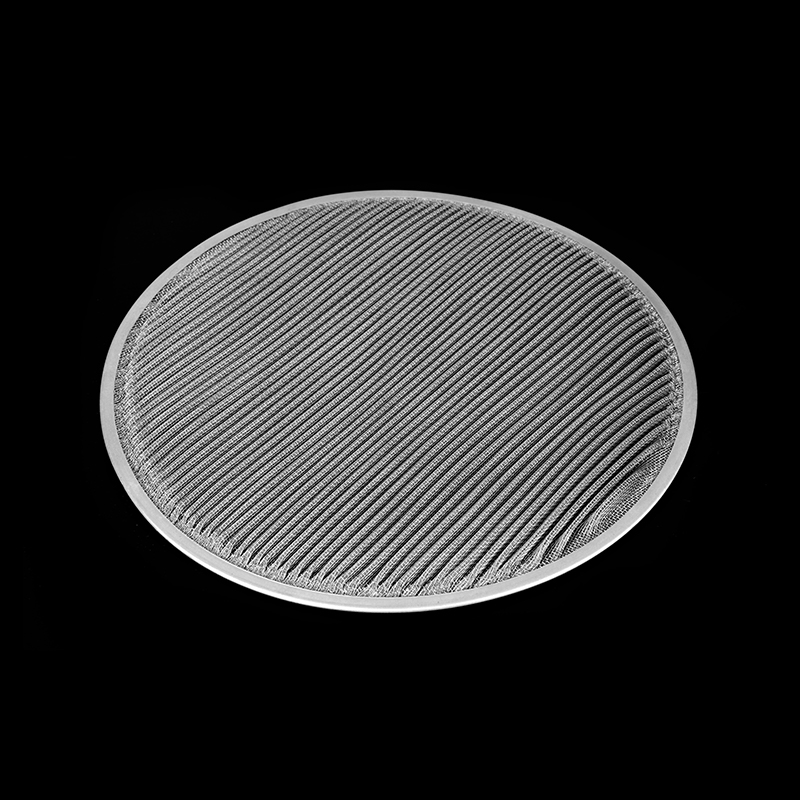
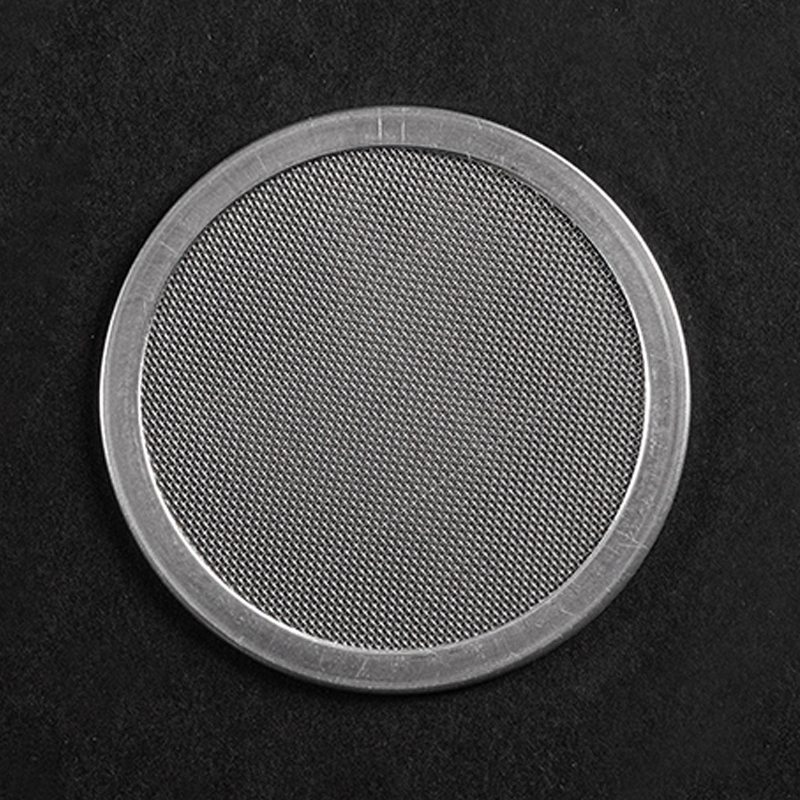
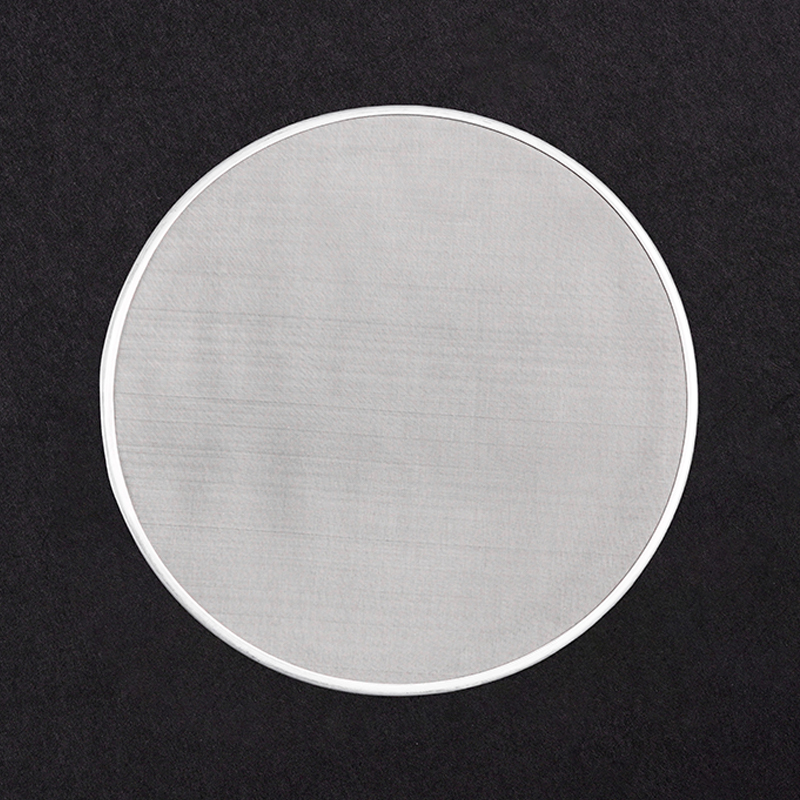
Multi-Layer Spot Welded Wire Mesh Panel is a reinforced filtration component made by combining multiple mesh layers through spot welding technology. It is mainly used for removing impurities from polymer melts during chemical fiber spinning, plastic extrusion, and other industrial filtration processes.
The multi-layer structure helps achieve a balance between filtration accuracy, flow stability, and mechanical support. As a Multi-Layer Spot Welded Filter Mesh Sheet, it provides enhanced filtration strength, while the panel structure offers reliable performance for continuous production environments.

Application Scenarios Product Core Features OEM Customization Service FAQ

Spot-welded wire mesh panels are widely used in industrial melt filtration applications:
Chemical Fiber Spinning: Applied in polyester, nylon, short fiber, and microfiber production to capture contaminants and support stable spinneret operation. The Multi Layer Spot Welded Filter Mesh Sheet structure helps maintain consistent filtration performance during long production cycles.
Plastic Processing: Used in PP, PE, PET sheet extrusion, plastic granulation, and masterbatch production to improve melt cleanliness and reduce production interruptions caused by impurities.
Nonwoven Manufacturing: Suitable for filtration systems requiring stronger support structures and stable material flow during continuous processing.
Equipment Support Applications: Provides compatible filtration solutions for different domestic and imported spinning machines, extruders, and polymer processing equipment.

Enhanced Structural Strength: Spot welding technology connects multiple mesh layers into a stable filtration panel, improving support performance under continuous pressure conditions.
Balanced Filtration Efficiency: Multi-layer composite construction optimizes filtration precision and pressure loss, with some designs achieving over 30% higher throughput than traditional filter meshes.
Durable Material Selection: 304/316L stainless steel mesh options provide corrosion resistance and high-temperature stability for demanding polymer processing environments.
Flexible Configuration: Supports single-layer, multi-layer composite, and reinforced structures, adapting to different filtration requirements and equipment conditions.
Wide Size Compatibility: Filter dimensions range from 5mm to 600mm, with special sizes available beyond 800mm.
Extended Service Performance: Backwashing cleaning support allows suitable structures to be reused, helping reduce replacement frequency during operation.

Multi-Layer Spot Welded Wire Mesh Panel supports customized production based on equipment design, filtration requirements, and operating conditions.
Layer Structure Customization: Provides different mesh layer combinations to match filtration accuracy and flow requirements.
Material Selection: Offers 304/316L stainless steel mesh options according to temperature resistance, corrosion conditions, and processing environments.
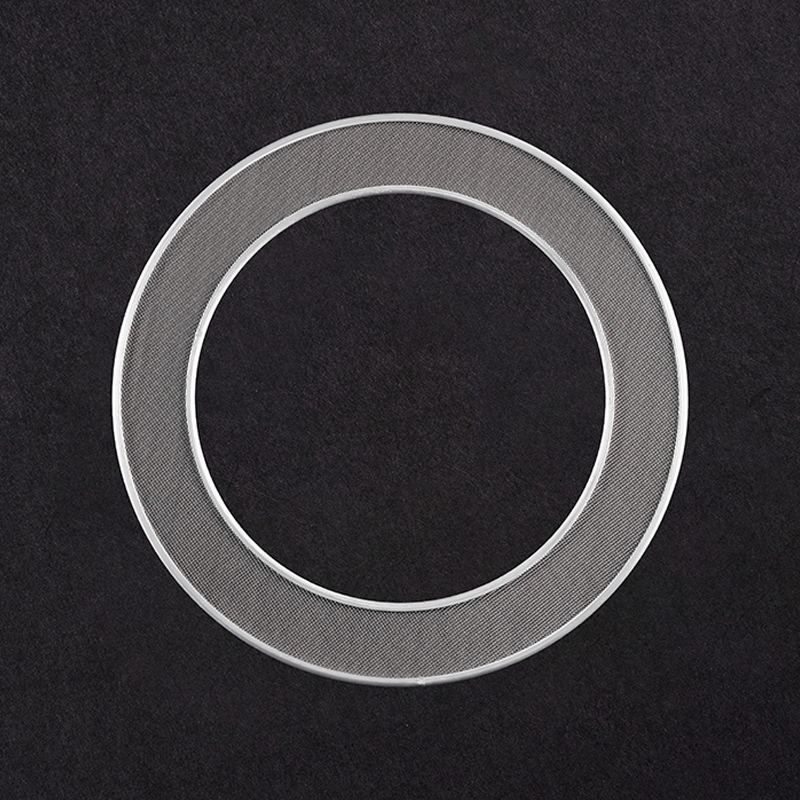
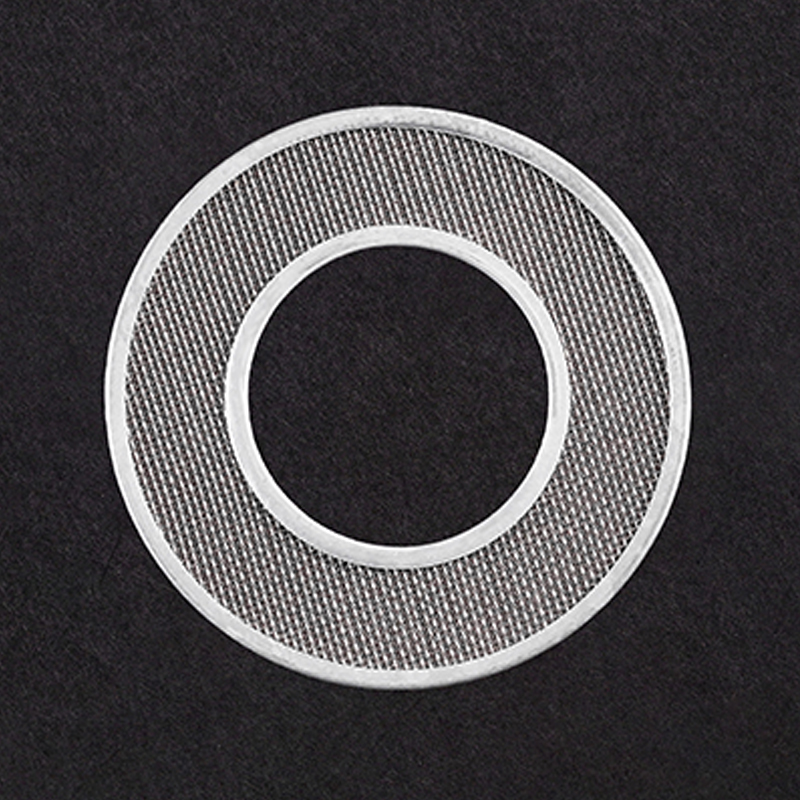
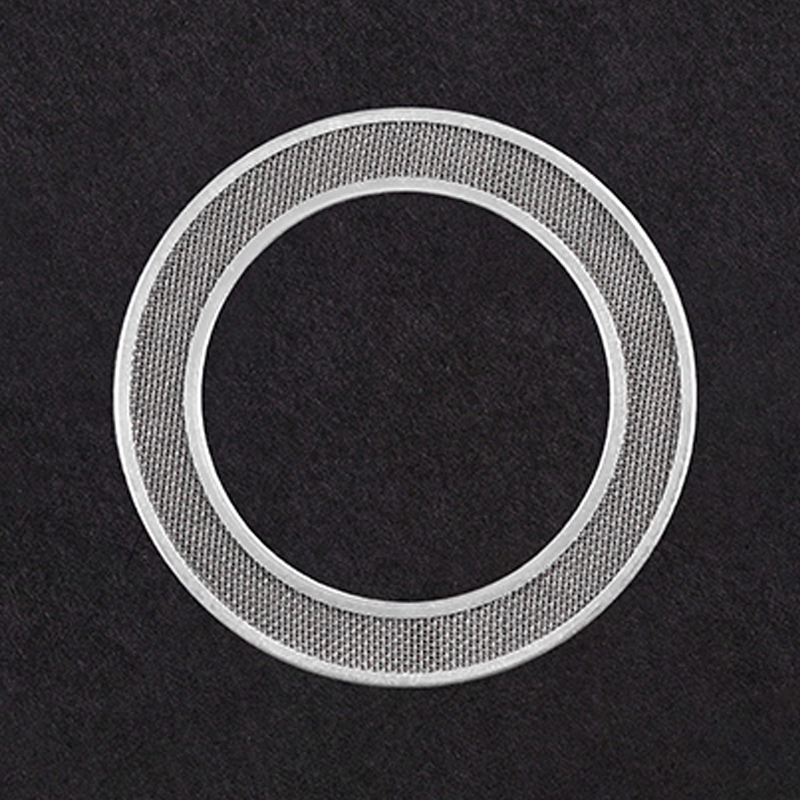
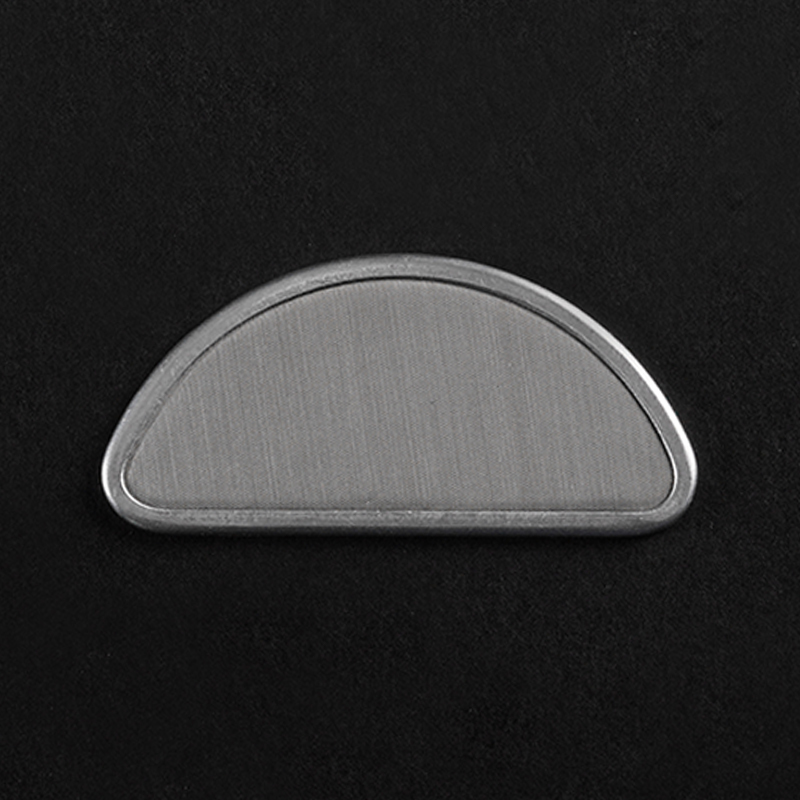
Shape & Size Customization: Supports round, rectangular, oval, and irregular designs with dimensions from 5mm to 600mm and larger sizes beyond 800mm for special applications.
Processing Options: Includes spot welding, edge wrapping, and reinforced structures to improve product stability.
Technical Support Service: Provides selection guidance, installation suggestions, and application feedback support to help optimize filtration performance.

Q1: What is Multi-Layer Spot Welded Wire Mesh Panel mainly used for?
It is mainly used for polymer melt filtration in chemical fiber spinning, plastic extrusion, nonwoven production, and related industrial applications.

Q2: What advantages does a Multi-Layer Spot Welded Filter Mesh Sheet provide compared with single-layer mesh?
Its multi-layer structure offers additional filtration stages and stronger mechanical support, making it suitable for applications requiring higher stability.

Q3: Can the mesh layers and structure be customized?
Yes, the number of layers, mesh specifications, dimensions, and edge processing methods can be adjusted according to equipment and filtration requirements.

Q4: What materials are commonly used for this type of welded mesh panel?
304 and 316L stainless steel are commonly selected due to their corrosion resistance and stable performance in high-temperature processing conditions.

Q5: What support services are available after purchase?
Technical guidance, application suggestions, maintenance support, and quality feedback services can be provided to help improve product usage efficiency.

About Us
Pujiang Xinxin Filter Company Limited

Founded in 1992, Pujiang Xin Xin Filter Company Limited is located in Pujiang County, Zhejiang Province. It is only 100 km away from Hangzhou and less than 300 km from Shanghai.

We specialize in filtration spare parts, especially for synthetic fiber manufacturing. Since 1997, we have introduced advanced production and testing equipment to raise production efficiency and product quality. Meanwhile, we attach great importance to talent development. Our core team comprises experienced technicians and engineers.

Our product portfolio includes disc filters (single-layer, multi-layer, regular and irregular shapes), cylinder filter elements, pleated filter elements, O-rings, spin packs and filter mesh. These products are widely used in chemical, chemical fiber and plastic industries.

Adhering to the corporate values of delivering high-quality products and premium services, we conduct all business with integrity.
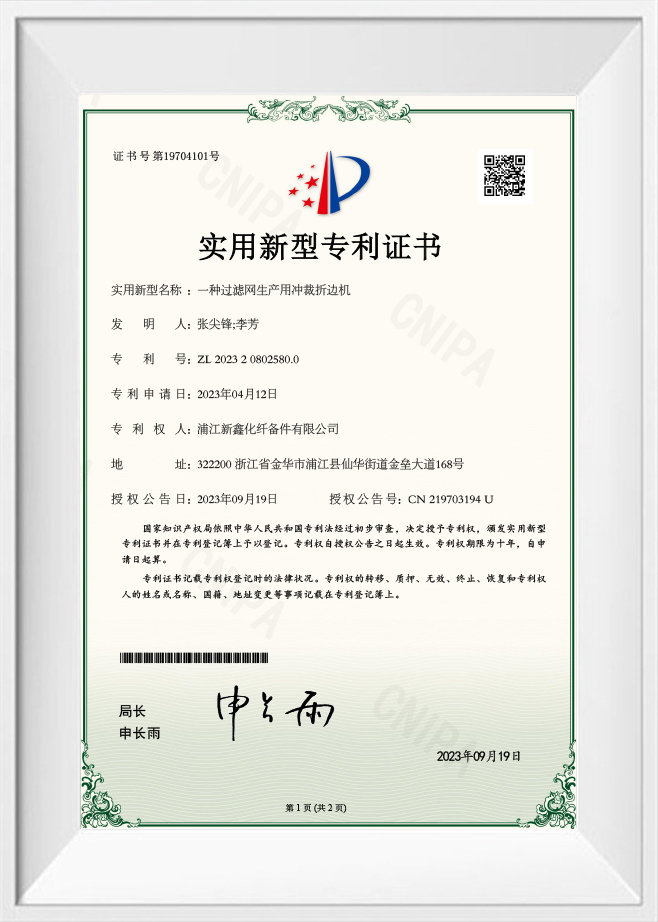
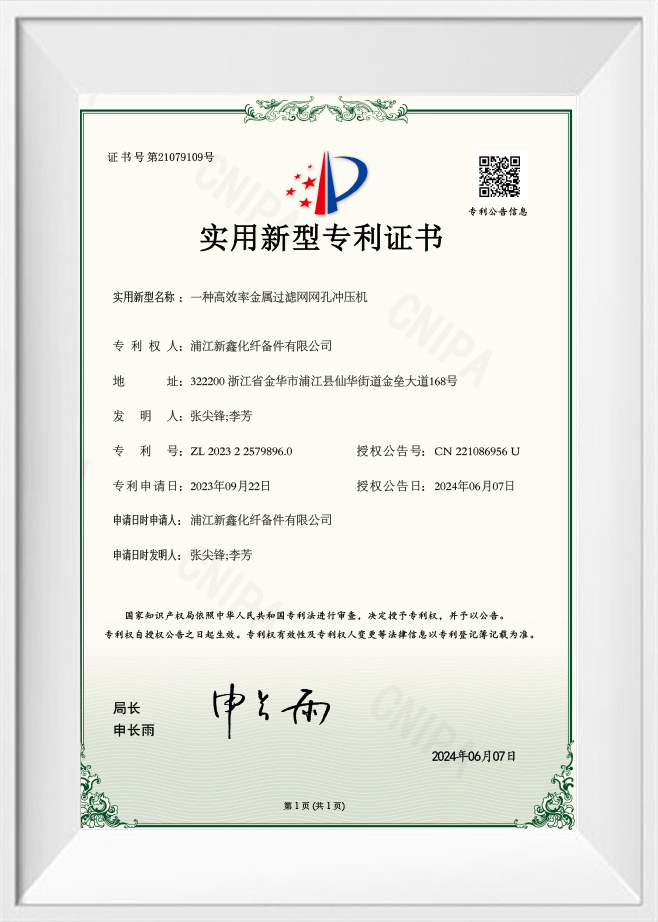
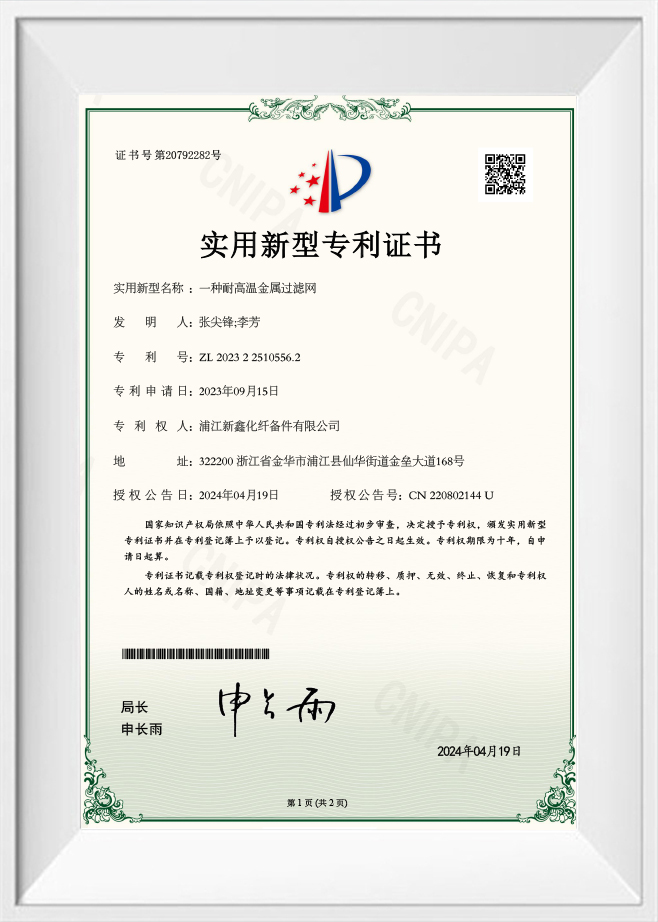
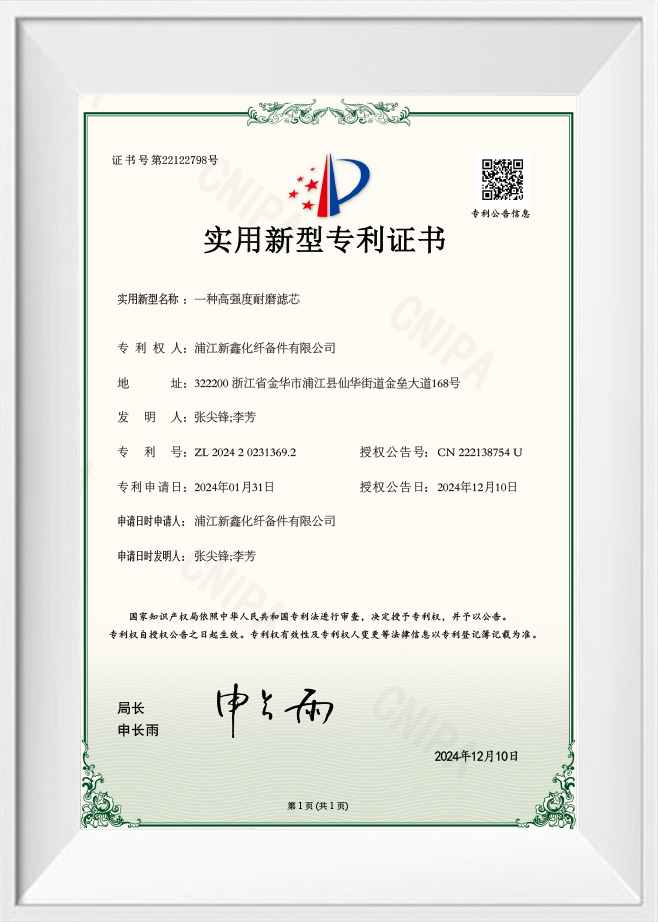
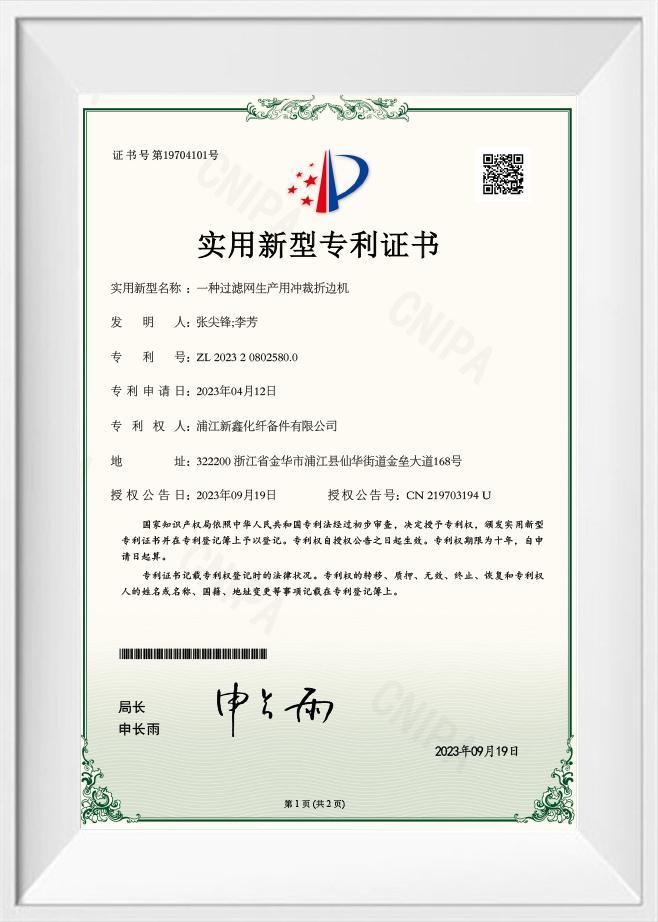
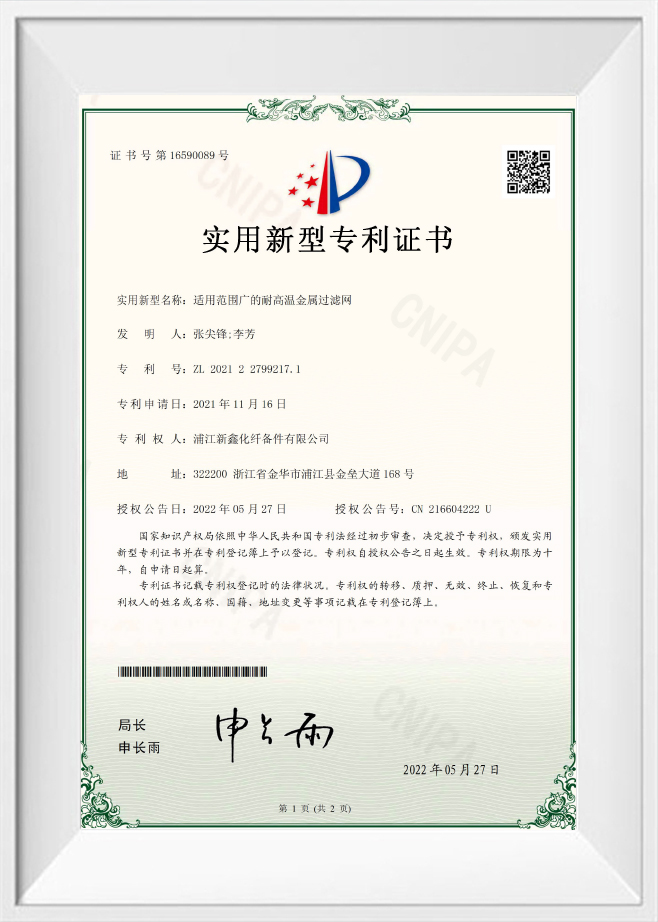
Certificate Of Honor
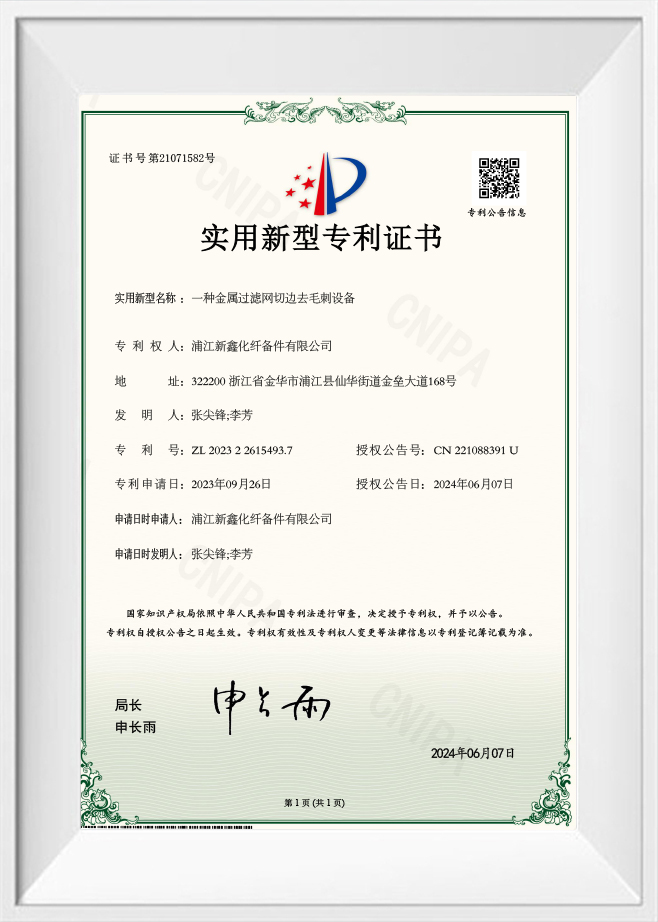
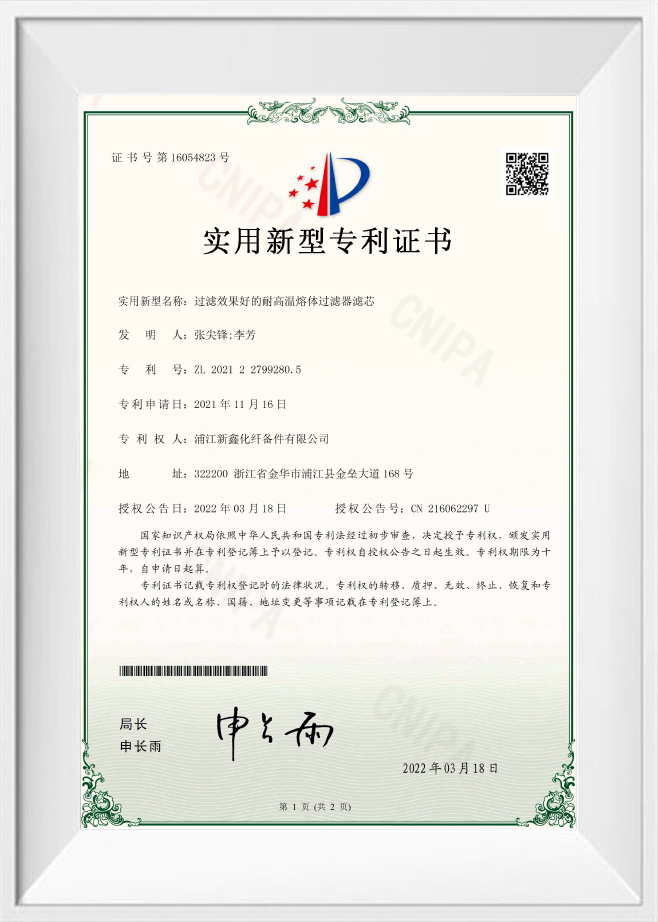
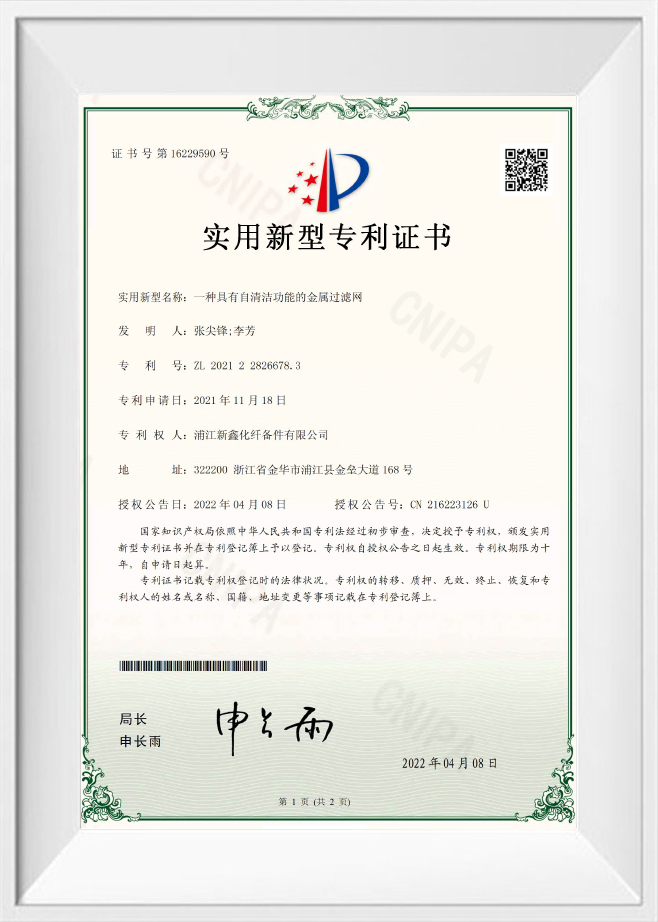
  • Certificate of Utility Model Patent
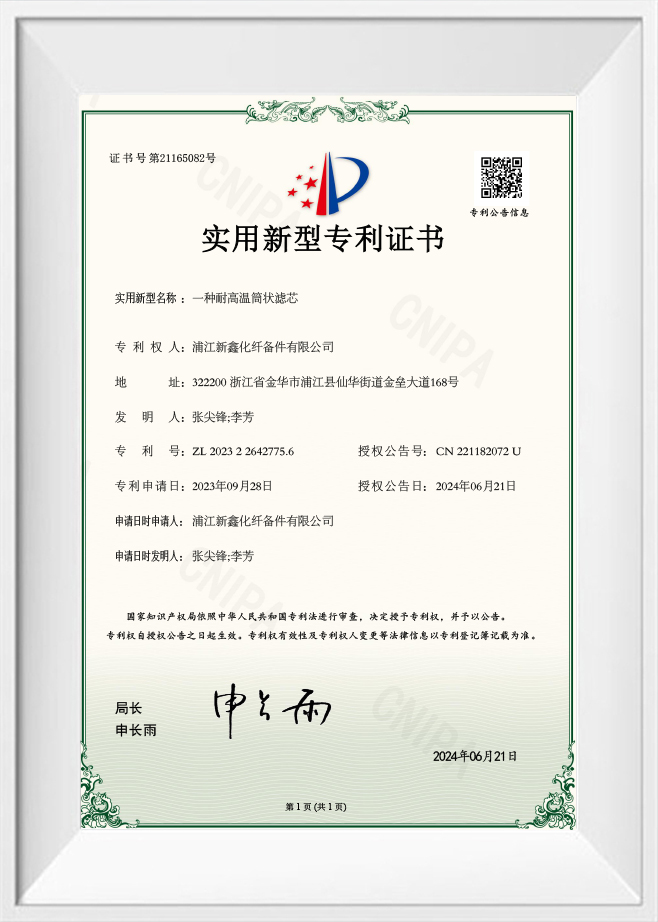
  • Certificate of Utility Model Patent
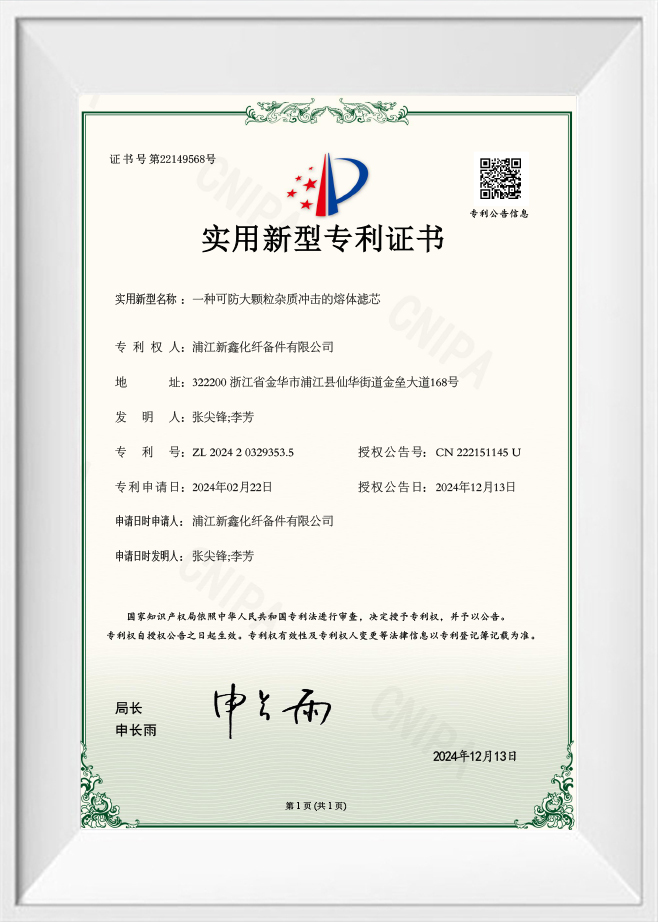
  • Certificate of Utility Model Patent
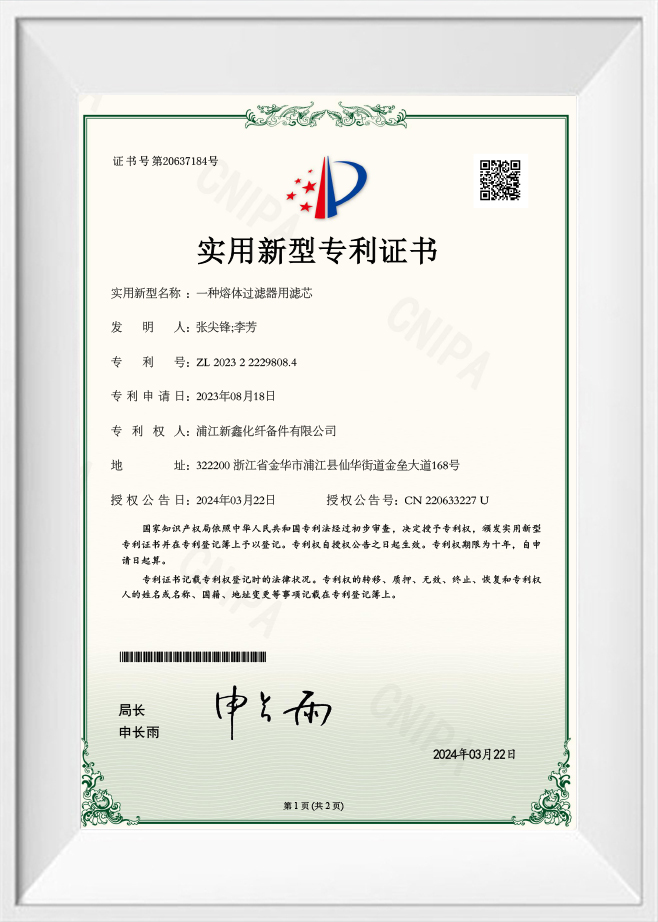
  • Certificate of Utility Model Patent
  • Certificate of Utility Model Patent
  • Certificate of Utility Model Patent
  • Certificate of Utility Model Patent
  • Certificate of Utility Model Patent
  • Certificate of Utility Model Patent
  • Certificate of Utility Model Patent
  • Certificate of Utility Model Patent
  • Certificate of Utility Model Patent
News
Message Feedback